Pool Cleaning Coverage Algorithm: How Robotic Pool Cleaner Manufacturers Optimize Navigation Efficiency
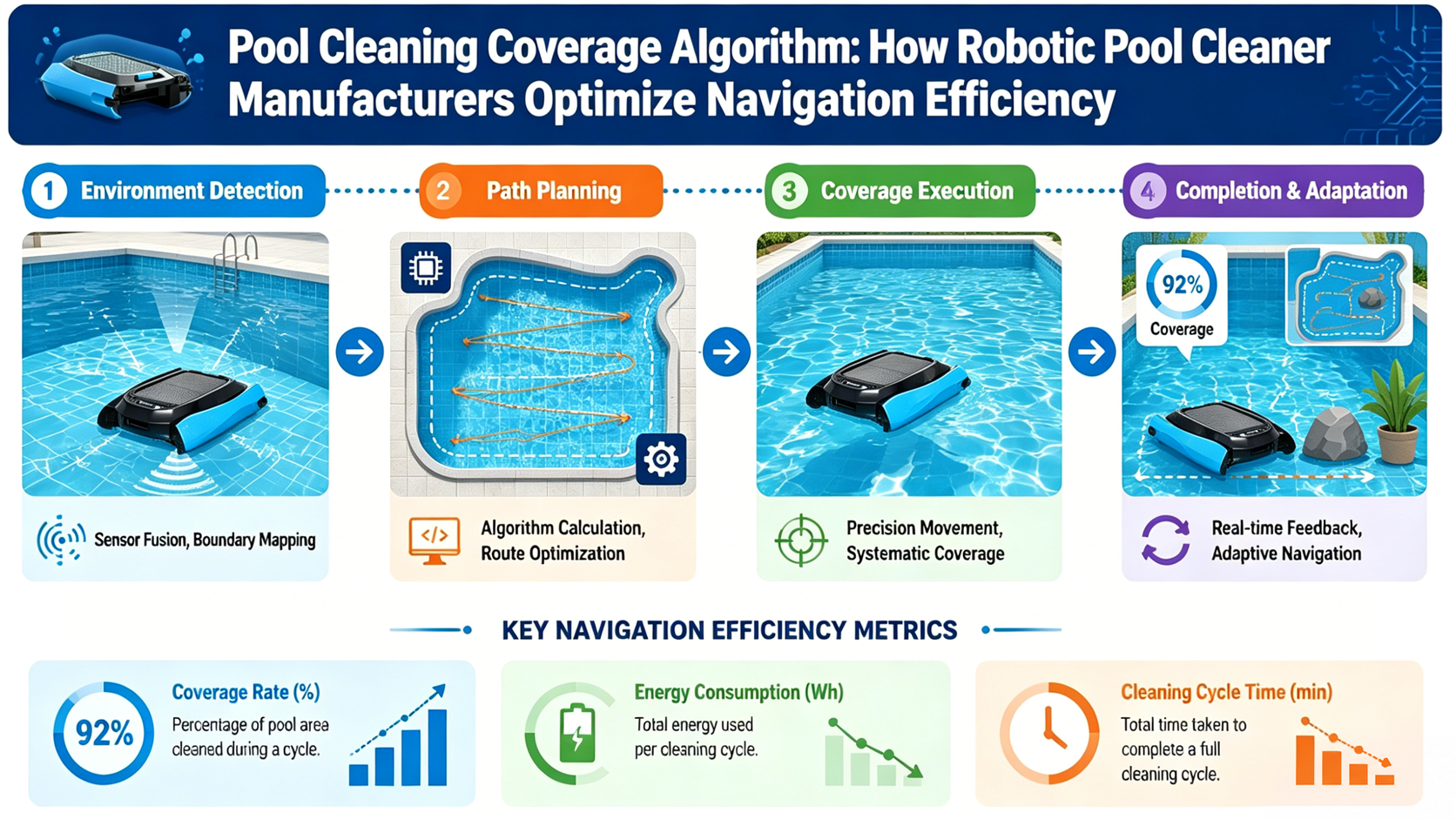
What Is a Pool Cleaning Coverage Algorithm?
A Pool Cleaning Coverage Algorithm is the navigation logic that enables an autonomous robotic pool cleaner to systematically traverse pool surfaces while minimizing missed areas, excessive overlap, and unnecessary energy consumption. The concept is closely related to coverage path planning (CPP), a well-established robotics discipline recognized by leading research institutions and engineering communities such as the IEEE.
For the pool cleaning robot industry, coverage algorithms are one of the most critical technologies affecting cleaning efficiency, battery endurance, user satisfaction, and overall product competitiveness. As consumer expectations shift toward intelligent automation, every leading robotic pool cleaner manufacturer invests heavily in navigation optimization technologies that maximize cleaning coverage while reducing cleaning time.
How Coverage Algorithms Work in Robotic Pool Cleaners
Core Navigation Process
Modern robotic pool cleaners combine sensors, onboard processors, and software algorithms to continuously determine position, evaluate cleaning progress, and select the next movement path. Rather than moving randomly, advanced systems use structured coverage strategies inspired by autonomous robotics research and industrial automation practices.
Pool Cleaning Coverage Algorithm Workflow Environment Detection Path Planning Coverage Execution Obstacle Handling Completion Check Typical process used by intelligent robotic pool cleaners for systematic coverage planning
Key Components Behind Navigation Efficiency
Coverage performance depends on several interconnected subsystems:
- Sensors: Gyroscopes, accelerometers, depth sensors, and obstacle detection systems collect environmental data.
- Localization Engine: Estimates the robot's position throughout the cleaning cycle.
- Coverage Algorithm: Determines the optimal cleaning route.
- Motion Control System: Converts navigation decisions into motor actions.
- Cleaning Feedback Logic: Monitors coverage completion and identifies remaining zones.
According to robotics literature published through organizations such as the IEEE and academic research on coverage path planning, efficient coverage algorithms can significantly reduce redundant movement while improving operational efficiency in autonomous cleaning systems.
Major Types of Pool Cleaning Coverage Algorithms
Random Navigation
Entry-level robotic cleaners often rely on collision-based random movement. While inexpensive to implement, this approach may produce inconsistent cleaning results and longer cleaning cycles.
Pattern-Based Navigation
Pattern-based systems follow predefined trajectories such as parallel lines, zig-zag routes, or wall-following sequences. These methods improve predictability and reduce overlap compared with random navigation.
Sensor-Assisted Intelligent Navigation
Advanced manufacturer designs integrate sensor feedback to dynamically adjust routes. The robot can detect boundaries, avoid repeated passes, and adapt to varying pool geometries.
AI-Enhanced Coverage Algorithms
The newest generation of robotic pool cleaners leverages artificial intelligence and machine learning techniques to optimize cleaning patterns over time. These systems can identify coverage gaps, improve route efficiency, and adapt to complex pool environments.
Coverage Algorithm Evolution Random Basic Coverage Pattern-Based Structured Routes Sensor-Assisted Adaptive Paths AI Navigation Predictive Optimization Increasing Navigation Intelligence and Coverage Efficiency Illustrative technology progression for autonomous pool cleaning systems
Why Coverage Algorithms Matter
Higher Cleaning Efficiency
Efficient coverage planning reduces repeated cleaning of already-cleaned areas and helps ensure that debris is removed from the entire pool surface.
Longer Battery Runtime
By minimizing unnecessary movement, optimized navigation conserves energy and extends operating duration, a key purchasing factor for consumers evaluating a robotic pool cleaner manufacturer.
Improved User Experience
Users benefit from shorter cleaning cycles, more predictable results, and reduced need for manual intervention.
Competitive Product Differentiation
Coverage performance has become a major benchmark for premium robotic pool cleaners. Manufacturers that deliver superior navigation efficiency often achieve stronger market positioning and customer retention.
Typical Applications of Pool Cleaning Coverage Algorithms in the Pool Cleaning Robot Industry
Coverage algorithms are applied across residential pools, commercial aquatic facilities, hotels, resorts, sports centers, and public swimming complexes. In each scenario, navigation efficiency directly affects operational costs and cleaning consistency.
For example, when cleaning a large residential pool with irregular geometry, an intelligent robotic cleaner may first scan the environment, generate a coverage strategy, prioritize high-debris zones, and continuously adjust its route based on sensor feedback. This approach mirrors broader autonomous robotics practices promoted by organizations such as the International Organization for Standardization (ISO), which develops standards supporting reliable robotic system design.
Typical Coverage Algorithm Application Scenario Pool Scan Route Generation Adaptive Cleaning Coverage Verification Illustrative workflow demonstrating how intelligent navigation improves cleaning outcomes
Further Reading and Related Topics
To better understand advanced navigation technologies, intelligent path planning, AI-assisted obstacle avoidance, or ODM customization opportunities for robotic pool cleaners, you can contact our technical team for a detailed consultation.
Within the pool cleaning robot industry, Shenzhen Haixin Robot Technology is committed to helping brands, distributors, and industry partners leverage advanced coverage algorithms, ODM development capabilities, and customized AI cleaning solutions to improve navigation efficiency, cleaning performance, and product differentiation.
The company's commitment to quality and compliance is supported by recognized certifications including ISO 9001, ISO 14001, BSCI, and FCC certification. These credentials reflect established quality management, environmental management, manufacturing responsibility, and regulatory compliance practices. The company also provides professional certification access channels, online user manuals, remote technical support, and customer-oriented service policies that contribute to product reliability and trustworthiness.
Frequently Asked Question
How does an AI-based pool cleaning coverage algorithm differ from random navigation?
AI-based coverage algorithms use sensor data, localization techniques, and adaptive path planning to systematically clean the pool while minimizing overlap and missed areas. Random navigation relies primarily on collision-driven movement and generally produces less predictable coverage. Coverage path planning principles are widely recognized within robotics research communities including the IEEE, where systematic coverage methods are considered more efficient for autonomous cleaning applications.