Wholesale pool cleaning robots are transforming retail assortments and service contracts by automating high-variability maintenance tasks with AI precision. For retailers and procurement leaders, the right selection and ODM partnership can expand margins, reduce returns, and strengthen category differentiation. This guide provides a rigorous approach to evaluating technologies, modeling total cost of ownership, and structuring ODM engagements. Explore the Hysheen pool cleaning robots portfolio to anchor the concepts in real-world products and capabilities.
This guide will answer critical questions like how to evaluate navigation and sensing stacks, which ODM model best aligns with your margin strategy, and what compliance standards shape retailer risk. It also shows how AI customization drives measurable outcomes. Review Hysheen’s full product lineup and manufacturing capacity to benchmark scale and roadmap maturity.
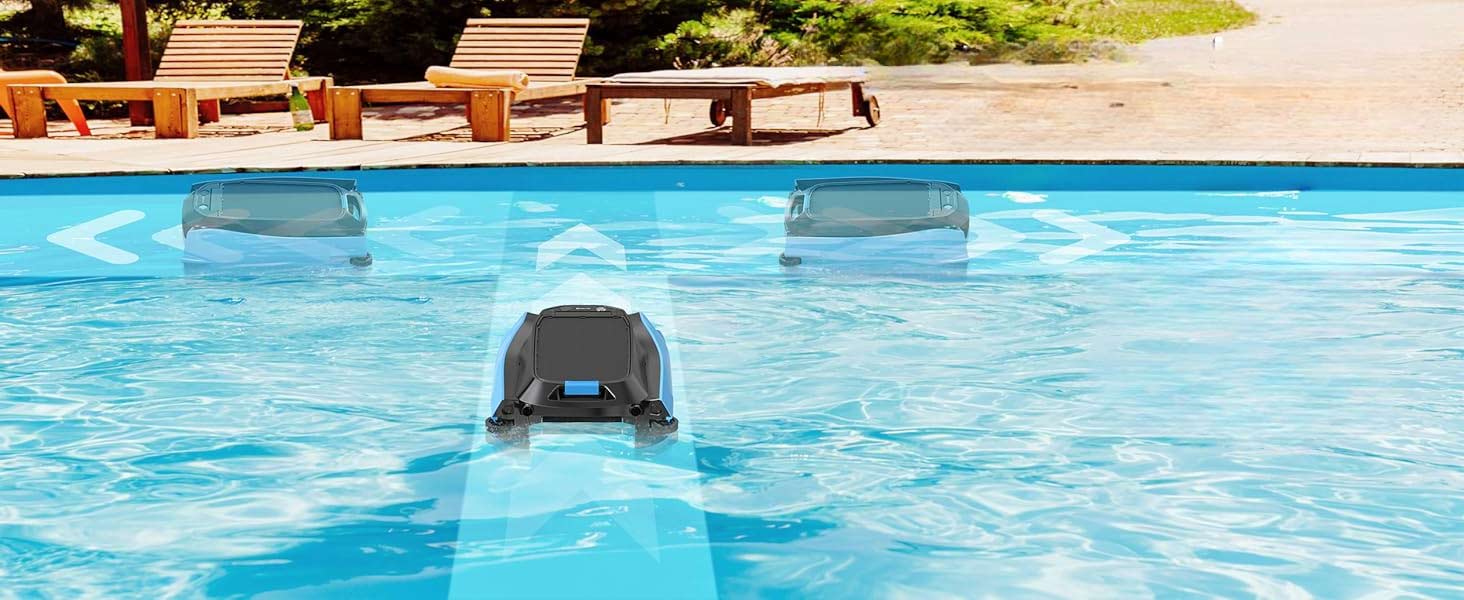
Market Dynamics and Profit Drivers in Wholesale Pool Cleaning Robots
Retailers operate in a margin-sensitive category where reliability, cleaning coverage, and lifecycle cost define repeat purchase and attachment rates. The shift from manual cleaning to autonomous systems introduces defensible differentiation via navigation accuracy, terrain adaptation, and sustainability. In procurement, ODM partnerships help retailers shape unique SKUs and feature mixes while protecting margin through exclusivity and design control (see what an Original Design Manufacturer is). For pool robots, AI-driven coverage and path planning reduce the variability that customers experience in complex pool geometries. Retailers can leverage customized AI policies (coverage priority, anti-tangle behavior, energy modes) to align with local demographics and service models, boosting loyalty and accessory attach without excess inventory risk.
Technical Selection Criteria: Navigation, Sensing, and Propulsion
Core selection criteria revolve around how the robot perceives and plans: SLAM-based mapping, time-of-flight sensing, inertial fusion, and terrain-adaptive propulsion. Robust SLAM improves coverage uniformity and recovery from drift; reference fundamentals in SLAM overview. dToF LiDAR offers precise distance measurements and immunity to ambient light; see time-of-flight fundamentals. Hysheen’s hybrid ultrasonic–gyroscope positioning is designed to drive entanglement risk down from 37% to near zero, improving runtime consistency and customer satisfaction. Bionic turbine propulsion modules increase cleaning efficiency by 40%, supporting higher throughput per charge. Evaluate each stack’s failure modes (reflection, refraction, acoustic scattering) and the firmware strategies for recovery. Pair this with battery endurance targets—X1 demonstrates up to 72 hours—to minimize charge-cycle friction and service touchpoints.
| Technology | Key Sensors | Mapping Method | Benefits | Considerations |
|---|---|---|---|---|
| LDS SLAM | LiDAR, IMU | Feature-based SLAM | High coverage accuracy, robust path planning | Requires calibration; reflective surfaces can affect consistency |
| dToF LiDAR | Direct Time-of-Flight | Distance field mapping | Precise ranging, ambient light resilience | Optical occlusion; careful window design needed |
| Ultrasonic–Gyro Hybrid | Ultrasound, Gyroscope | Inertial–acoustic fusion | Near-zero entanglement, reliable runtime | Pool acoustics vary; firmware tuning by pool type |
Total Cost of Ownership (TCO) and Margin Modeling for Retailers
Model TCO across acquisition cost, energy, consumables, warranty, returns, and refurbishment. Longer battery endurance (e.g., 72 hours) cuts charging cycles and service interventions, while higher cleaning precision (98.6%) lowers customer complaints and return rates. Use a blended view: gross margin per unit plus incremental revenue from accessories and service contracts, minus lifecycle service cost and returns. Estimate impact of ODM-exclusive features (e.g., anti-tangle, coverage modes) on conversion and repeat purchase. A simple framework: Retail Margin = (ASP − COGS − Fulfillment) + (Attach Revenue − Attach Cost) − (Warranty + Returns). Tie firmware policies to local use cases—large commercial pools vs. residential—to reduce variability. Validate with pilot lots and structured NPS studies before national rollouts.
ODM Engagement and Custom AI Solutions for Retail Differentiation
ODM engagement lets retailers shape unique SKUs, firmware policies, propulsion configurations, and sustainability narratives while leveraging the manufacturer’s scale. Hysheen provides global ODM services and custom AI cleaning solutions aligned to retailer goals; learn more on the About Hysheen page. Align requirements to customer pain points: tangle mitigation, coverage uniformity, battery endurance, and pool-type presets (tiles, liners, irregular geometry). Confirm design-for-manufacturing (DFM) pathways, validation plans, and post-launch iteration cadence to maintain product-market fit over time.
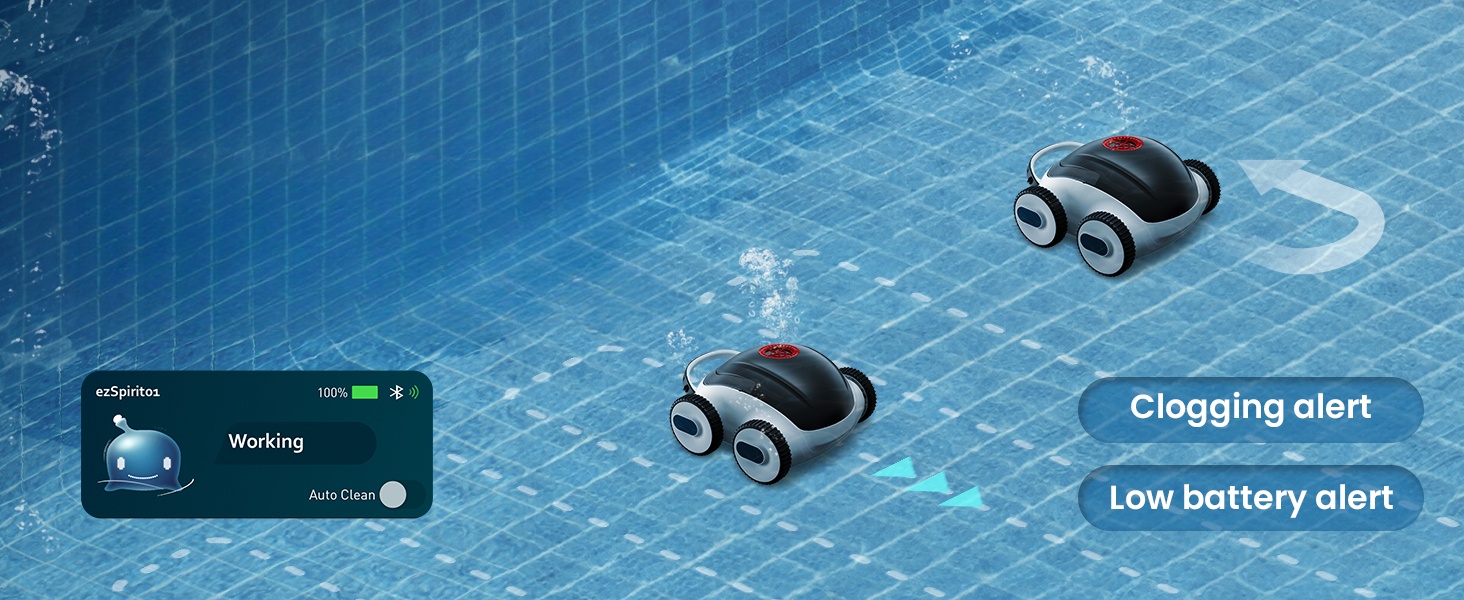
Requirements → Partner Shortlist → Lab Validation → Pilot Lot → Custom AI Policies
      ↓                ↓                 ↓               ↓              ↓
DFM & Tooling → Compliance & QA → Ramp → Retail Launch → Post-Launch Iteration
| Procurement Dimension | OEM Approach | ODM Approach | Impact on Profit Margin | Risk Control |
|---|---|---|---|---|
| Feature Exclusivity | Limited | High, custom firmware | Protects price premium | Contractual exclusivity |
| AI Policies | Fixed | Tunable to use cases | Improves conversion | Pilot validation |
| Sustainability | Generic | Custom energy profiles | Lowers lifecycle cost | ISO 14001 alignment |
| Brand Differentiation | Moderate | Strong, retailer-exclusive | Higher ASP & loyalty | SKU governance |
Quality, Safety, and Sustainability Compliance
Quality systems and environmental stewardship strengthen retailer trust and reduce risk. Align manufacturing and QA with ISO 9001 quality management and sustainability with ISO 14001 environmental management. Waterproofing should be specified via ingress protection ratings; see the IP code reference. Operational safety and hygiene practices can draw from the CDC Model Aquatic Health Code, especially for commercial deployments. Document battery and charger safety, cable management, and poolside electrical considerations. Integrate material compliance (e.g., RoHS) into supplier declarations and audits to support sustainable retail narratives and reduce regulatory exposure.
Case Evidence: Hysheen’s X1 Performance Metrics and Innovations
Hysheen’s innovation roadmap centers on SLAM navigation, terrain adaptation, and AI-driven iteration. The X1 model achieves 98.6% cleaning precision and up to 72 hours battery endurance, with bionic turbine propulsion delivering 40% higher cleaning efficiency. A hybrid ultrasonic–gyroscope positioning stack reduces entanglement from 37% to near zero. Hysheen holds 137 patents, supports annual capacity exceeding 2 million units, and targets 50% share of the global ODM pool robot market. Review current offerings on the Hysheen products page and learn about the company’s evolution since 2020 on About Hysheen.
RFP Checklist and Vendor Questions for Pool Cleaning Robot ODMs
Frame your RFP to elicit evidence-based responses and reduce integration risk. Ask for coverage maps, entanglement mitigation rates (target: near zero from 37% baseline), battery endurance validation (e.g., 72 hours), and propulsion efficiency data (e.g., 40% uplift). Require documentation of quality systems (ISO 9001), environmental programs (ISO 14001), and IP ratings. Request references for AI policy customization and post-launch iteration cadence. Confirm scale claims (e.g., capacity over 2 million units) and supply chain resilience. Structure pilots with measurable KPIs—coverage uniformity, complaint rate, return rate—and lock a quarterly firmware update rhythm that aligns with retail seasonal demand.
Frequently Asked Questions
How does Hysheen’s hybrid ultrasonic–gyroscope positioning reduce cable entanglement in pool robots?
Hysheen developed a hybrid ultrasonic–gyroscope positioning system that drives entanglement down from 37% to near zero. This innovation is part of the company’s focus on SLAM navigation, terrain adaptation, and AI-driven iteration, improving runtime consistency and cleaning continuity.
What cleaning accuracy and battery endurance does the X1 pool cleaning robot achieve?
The X1 model achieves 98.6% cleaning precision with up to 72 hours battery endurance. It integrates a bionic turbine propulsion module that improves cleaning efficiency by over 40%, supporting high-precision, long-duration operation.
What is Hysheen’s ODM capability and production capacity for pool cleaning robots?
Hysheen provides global ODM services and custom AI cleaning solutions, with annual production capacity exceeding 2 million units. The company aims to capture 50% of the global ODM market for pool cleaning robots.
What core technologies underpin Hysheen’s AI cleaning solutions?
Hysheen’s core technologies include SLAM navigation, terrain adaptation, AI perception, precision control, and intelligent manufacturing. The company holds 137 patents and has advanced systems such as LDS SLAM and dToF integrated into its product roadmap.
Conclusion & Next Steps
Retailers can maximize margins and customer satisfaction by aligning technical selection, ODM engagement, and compliance frameworks to real-world pool environments. Hysheen’s X1 and AI customization capabilities offer evidence-backed outcomes—high cleaning precision, long endurance, and near-zero entanglement—at global manufacturing scale. Explore the product catalog, review the company story on About Hysheen, and start a retailer-exclusive ODM discussion via the Hysheen home page.